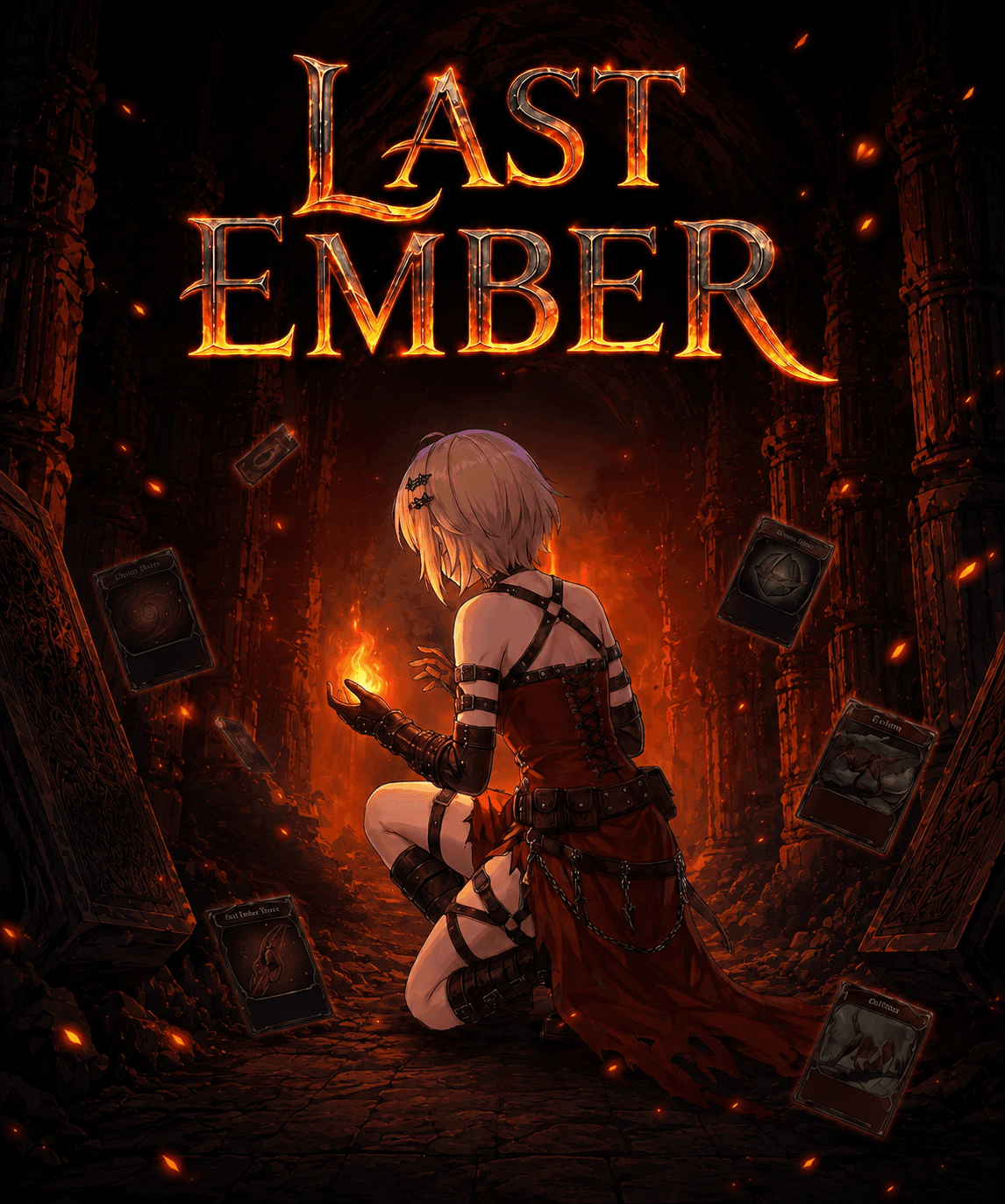
Solo Build · Unity 6 + AI Asset Harness · Steam Release
Last Ember — Roguelite Deck-Building Card Game
Last Ember — solo Unity 6 roguelite deck-builder for Steam
Building Last Ember, a solo-developed Slay-the-Spire-style roguelite deck-building game in Unity 6, targeting a Steam release. Designed a 4-chapter progression system with 15-node runs, archetype-driven deckbuilding, mana-scaling chapters, relics, merchants, events, and boss encounters that pressure player strategy across Herbivore and Carnivore dinosaur archetypes.
AI-assisted asset generation pipeline
Built a Next.js 16 + TypeScript companion app that converts frontmatter-tagged Markdown prompt files into a structured AI asset-generation pipeline. The system generates cel-shaded card art, dinosaur sprites, skill icons, relic/potion icons, node backgrounds, and trailer storyboard assets, then exports them into a Unity-ready asset folder. Added automated post-processing for background removal and visual-style cleanup to keep all game assets consistent.
Steam demo and release roadmap
Preparing Chapter 1 as a free Steam demo with the complete combat, map, shop, event, and progression loop. Producing the Steam store page, capsule art, screenshots, and trailer assets through the same Markdown-driven pipeline, with demo telemetry planned to guide balance, localization, and Chapter 2–4 content expansion.
Last Ember — SEEDANCE 2.0 cinematic trailer for Steam
Produced an AI-generated cinematic trailer for Last Ember using SEEDANCE 2.0, separate from in-engine gameplay footage. Authored the image storyboard, locked a protagonist character master asset for shot-to-shot consistency, and animated each sequence from still frames into motion.
Integrated the trailer workflow with the same Markdown-driven asset harness used for in-game card art, keeping the cinematic, Steam store assets, and game visuals aligned under one consistent cel-shaded visual language.
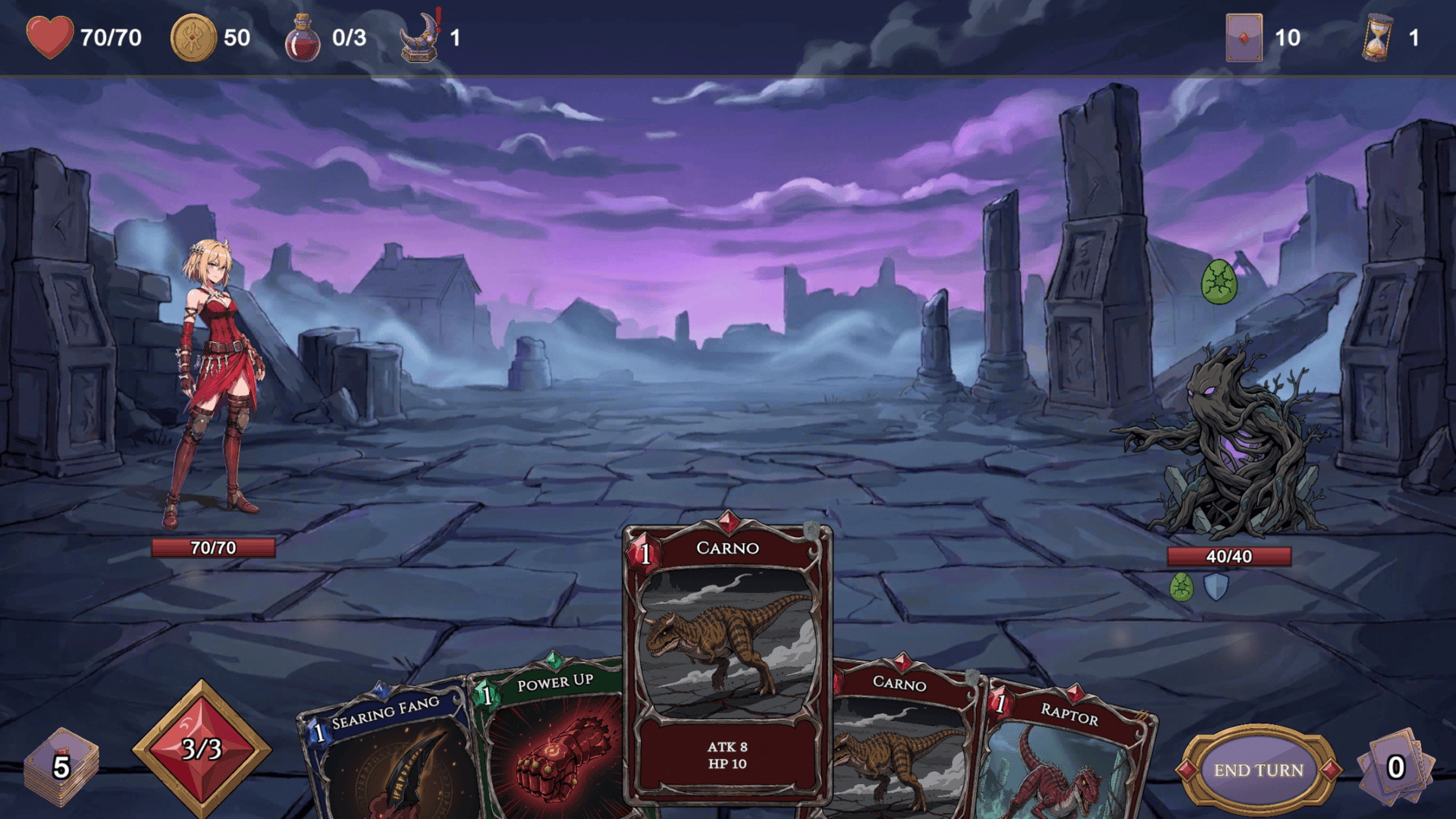
Combat loop — summoning, mana management, and auto-attack logic
Designed a card-combat loop where each fight draws a 5-card hand from a 20-card deck. The player controls a 70-HP archaeologist summoner who casts attack, defense, and buff spells while summoning dinosaurs that auto-attack based on enemy targeting indicators. Carnivore summons require sacrificing a Herbivore, turning deck composition into an active resource-management decision rather than a simple mana-curve problem.
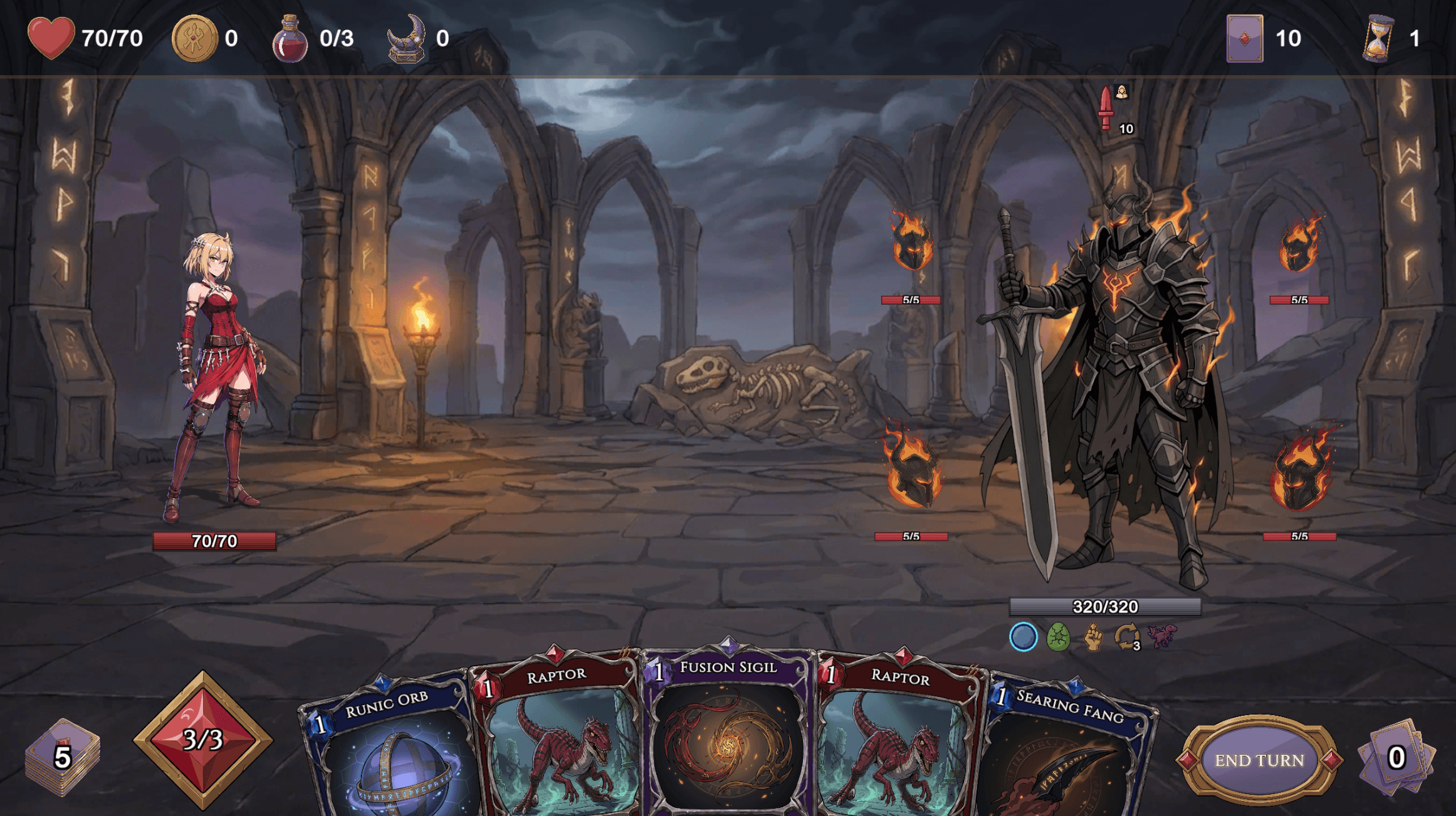
Boss encounters — handcrafted archetype pressure
Designed each chapter to end with a handcrafted boss encounter that pressures a specific deck archetype. For example, the Chapter 2 Flame Knight boss uses persistent flame echoes that prioritize the summoner, punishing summon-heavy Carnivore boards and forcing players to balance aggression with survivability. Used boss mechanics as a balancing constraint for each chapter’s card pool.
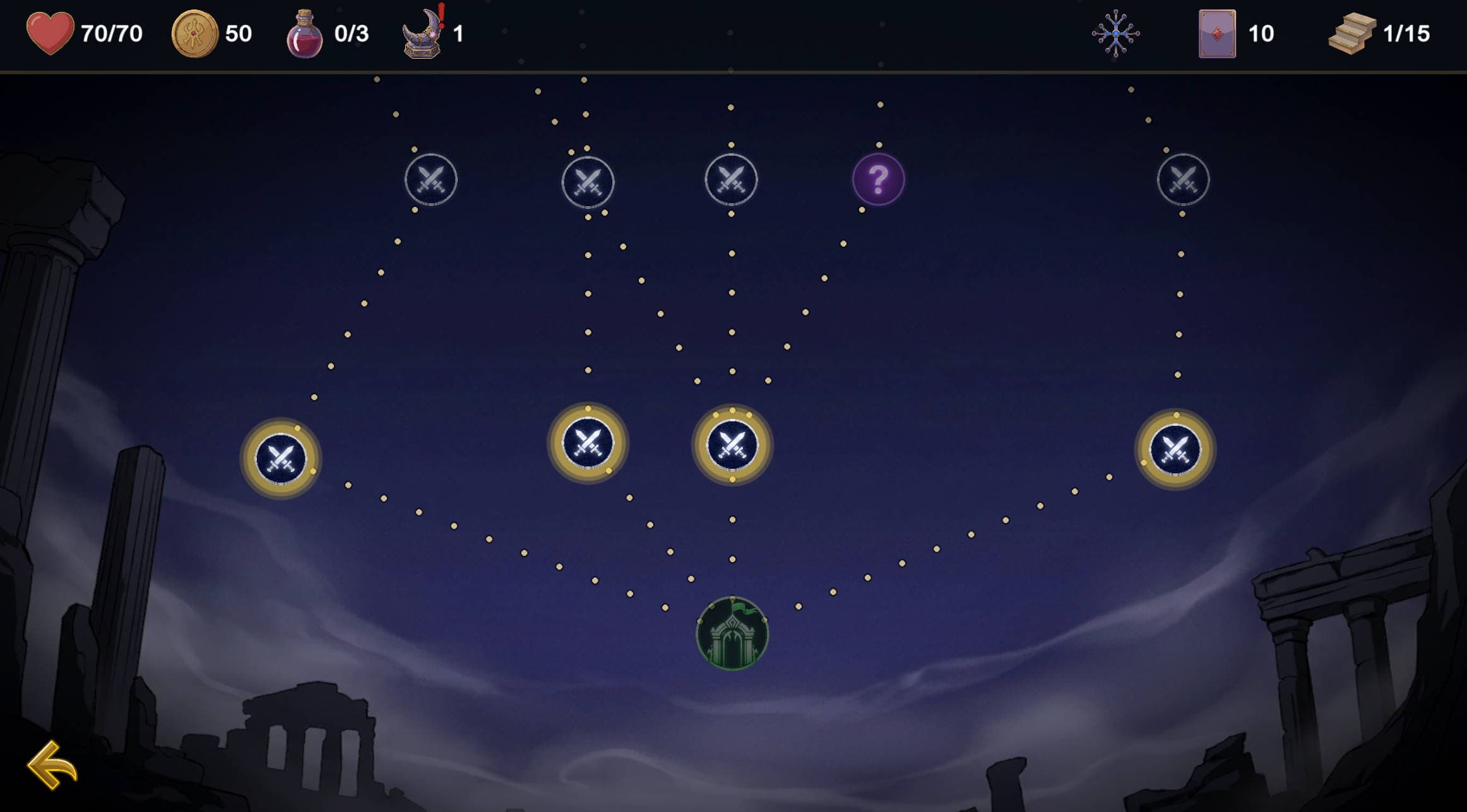
Map-node algorithm and event branching
Designed a 15-node chapter map algorithm that mixes combat, village, merchant, and event nodes, with branching event choices such as Mystery for a free relic or Heal for 25% HP recovery. These choices compound across the run, turning relic acquisition and health pacing into run-level strategy beyond individual fight tactics.
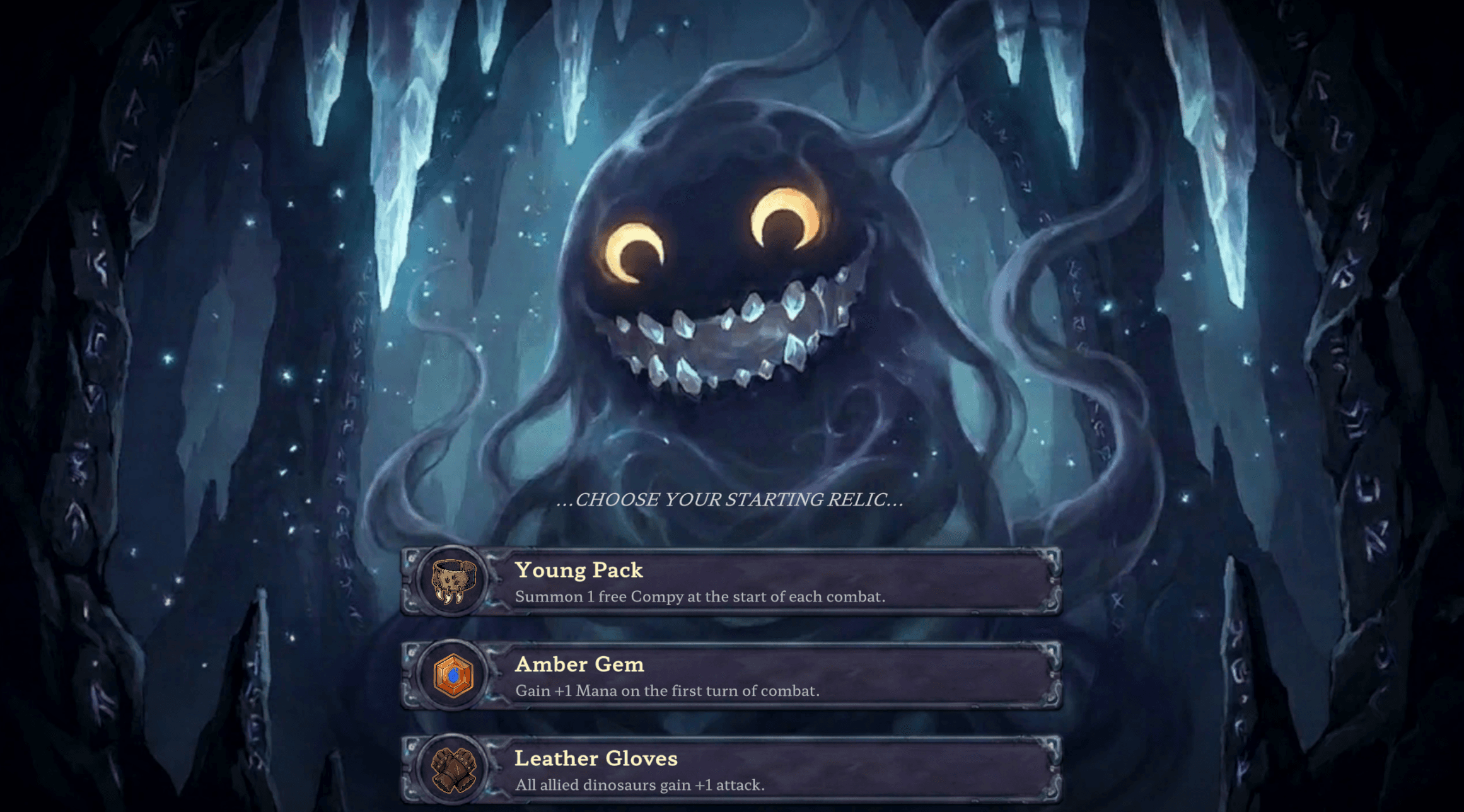
Run-defining starting relics
Designed a starting-relic system that lets players choose a run-defining modifier at the beginning of each run. Each relic reshapes the early-game tempo and guides the player toward a distinct opening strategy, increasing replayability and strategic variety.
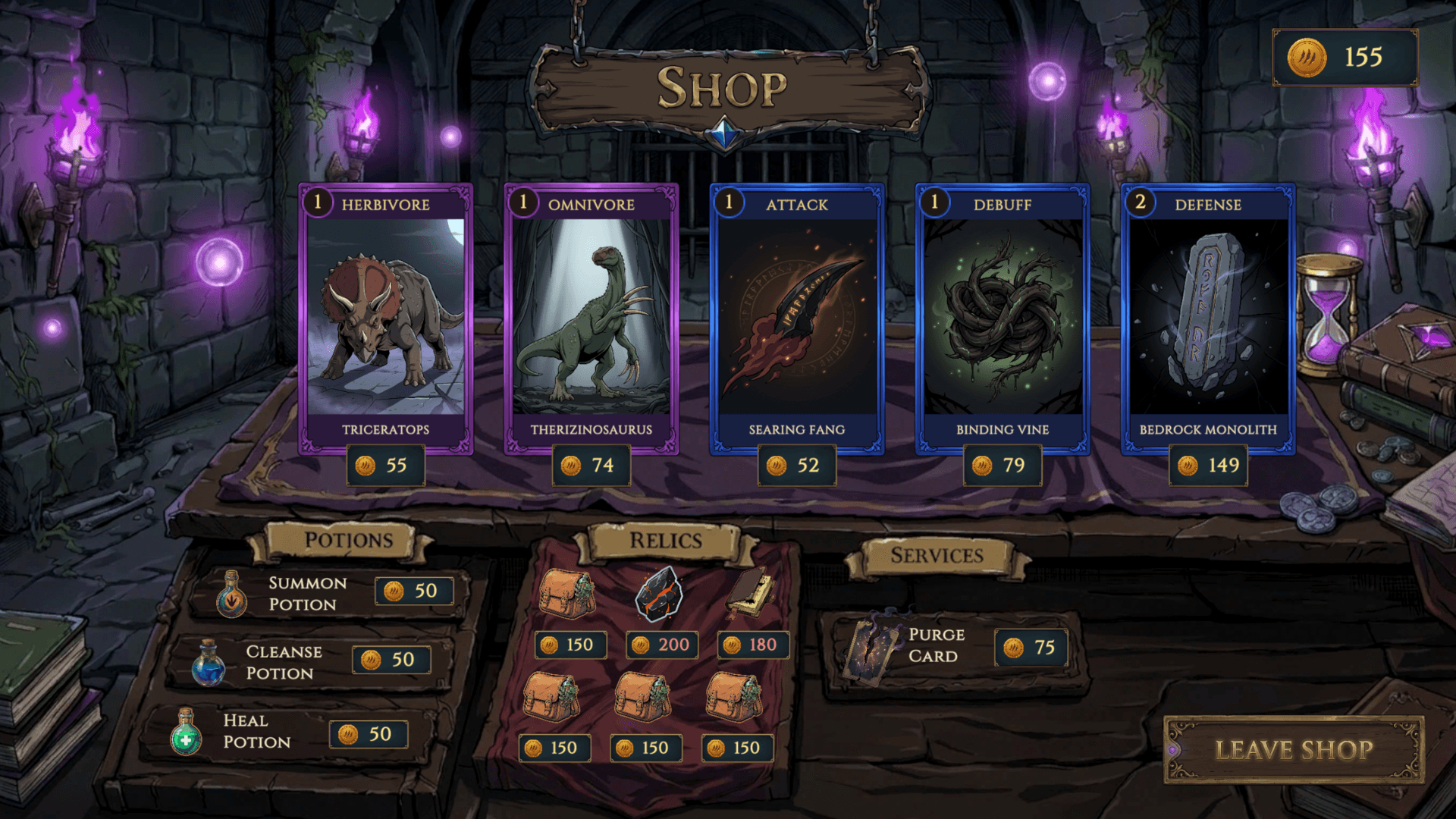
Merchant nodes as deck-management decisions
Designed merchant nodes that combine card purchasing, potion utility, relic acquisition, and card purging in one decision point. The purge service gives players a controlled way to prevent deck dilution across a run, making the merchant a strategic deck-management layer rather than a simple shop interface.