Kookmin University Global PBL Program · Team Lead
In-Vehicle IoT Data Visualization Device
Context
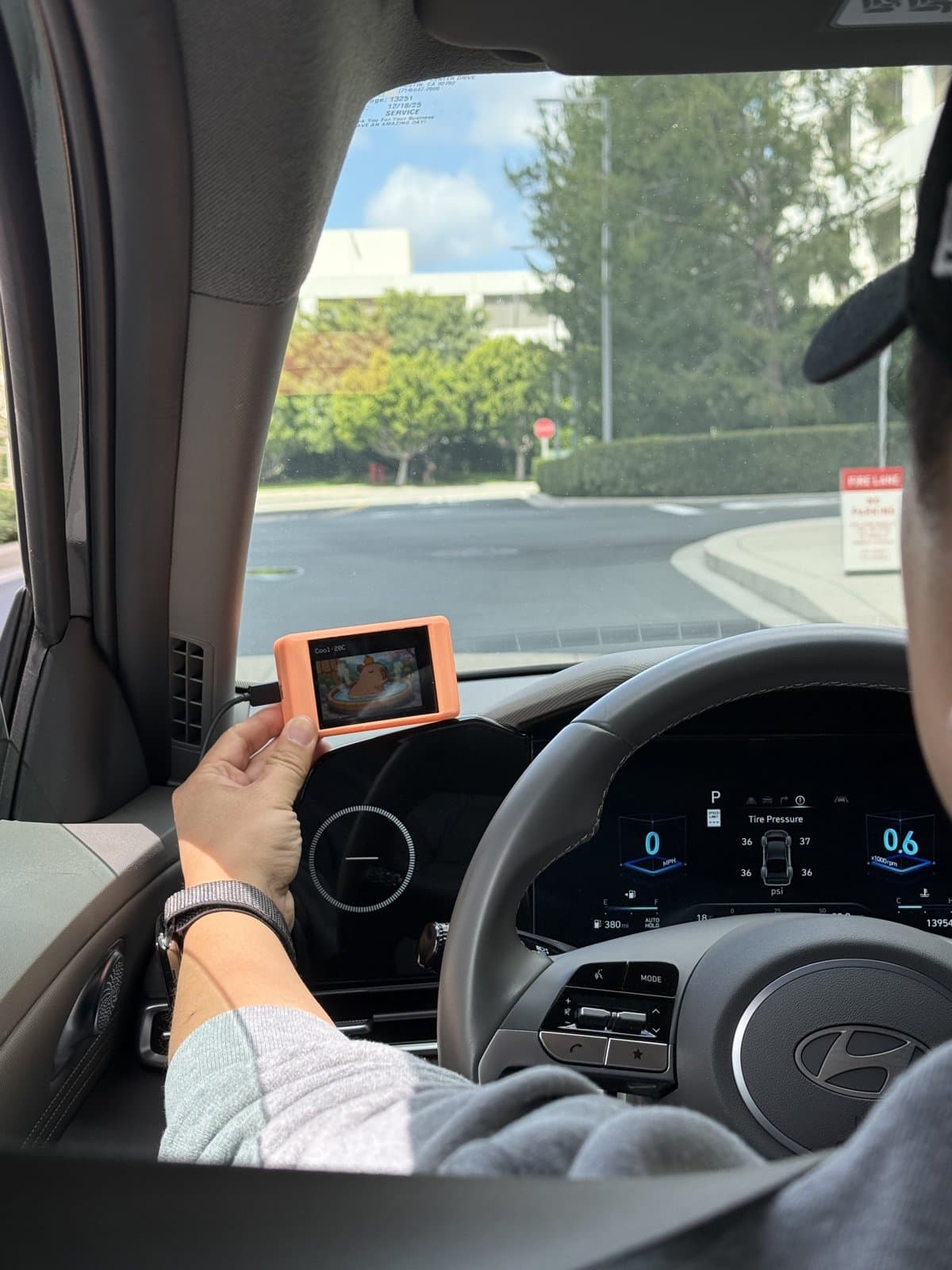
Led a Global PBL Program team in Irvine, California to design an in-vehicle IoT device that converts live OBD-II vehicle telemetry into dashboard-mounted TFT visualizations. Owned the project end to end, including PCB design, mechanical enclosure prototyping, ESP32-S3 firmware, and real-vehicle validation on a Hyundai Elantra. Extended testing to a Rivian R1S, where EV-side OBD-II limitations led the team to pivot the data-acquisition strategy toward GPS and IMU-based motion sensing.
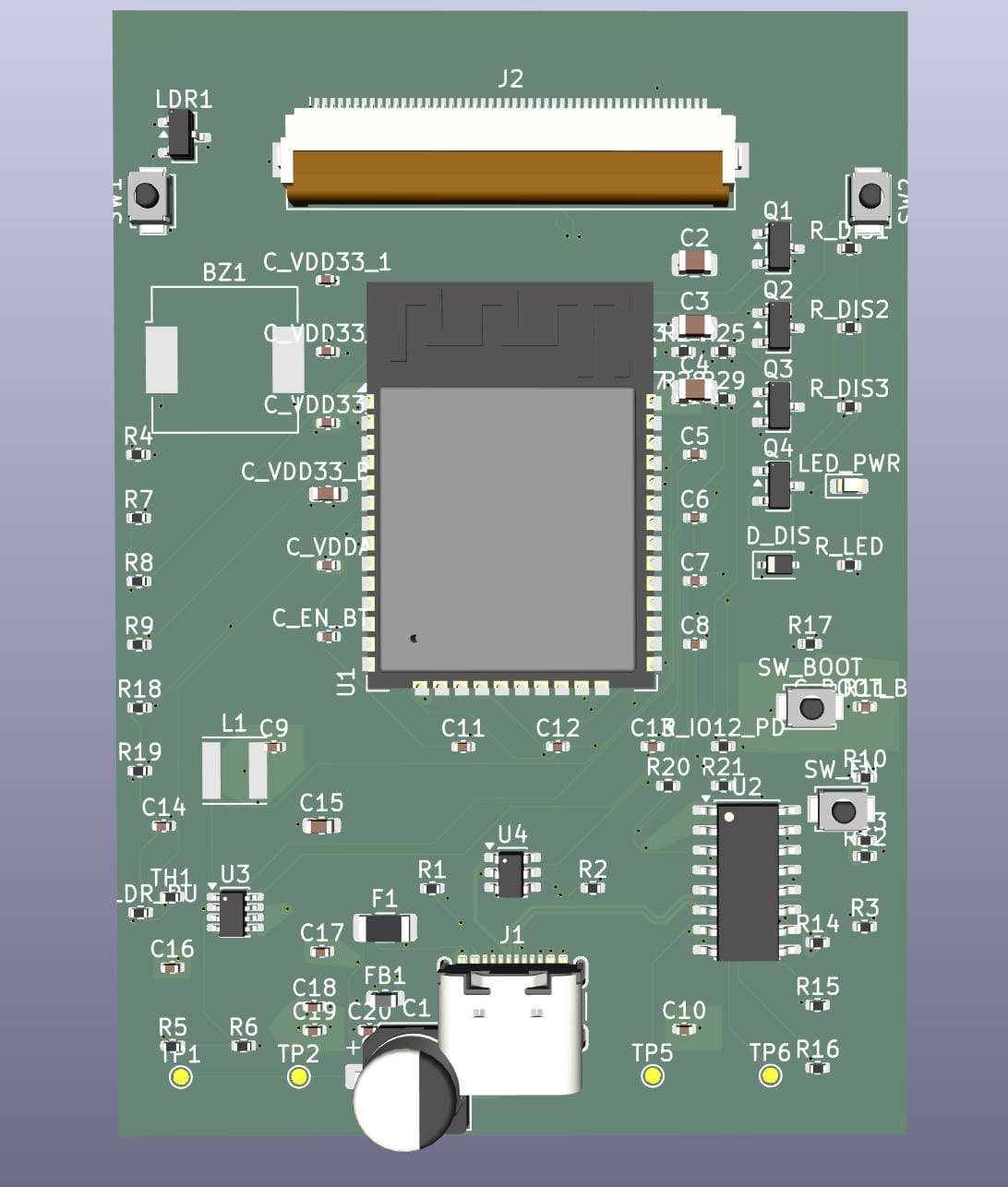
PCB design and validation in KiCad
Designed the device PCB in KiCad, using AI-assisted schematic and layout iteration through an MCP-based workflow. Refined the final board to 0 ERC and 0 DRC errors, confirming clean schematic-to-layout synchronization, no clearance violations, and no unconnected nets.
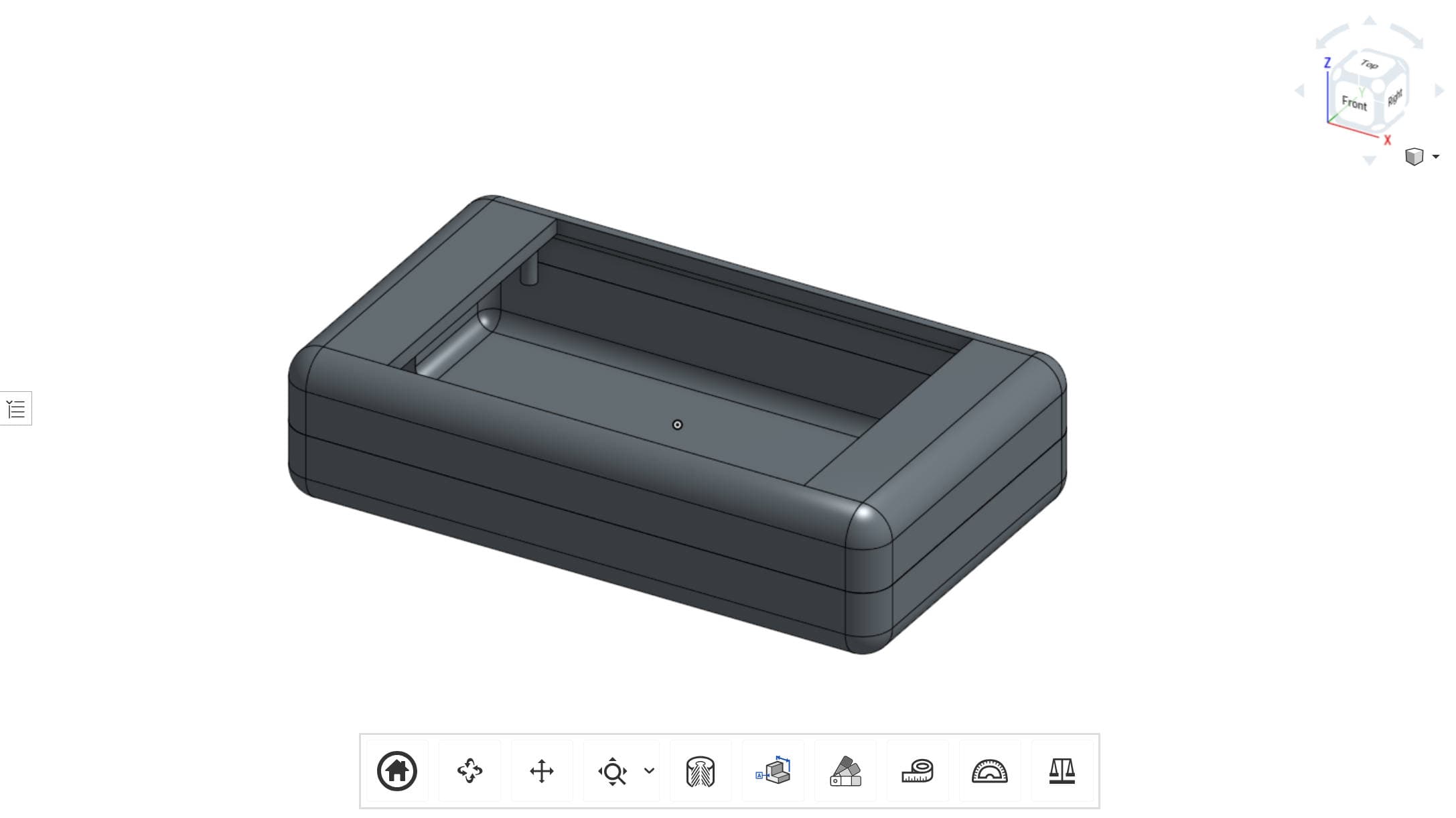
Mechanical enclosure design and 3D-printed prototyping
Modeled and 3D-printed a custom enclosure matched to the perfboard layout and TFT display window, with clearance for OBD-II cable strain relief and internal wiring. Iterated print tolerances until the prototyping board, screen, and harness seated cleanly without stressing the connectors.
Hyundai Elantra real-vehicle validation
Validated the full device pipeline on a Hyundai Elantrathrough the OBD-II port, polling live vehicle PIDs including speed, throttle position, and RPM via an ELM327-class CAN interface. Parsed the data in ESP32-S3 firmware and rendered speed-reactive animations on the TFT display, confirming real-time response to driver inputs during on-road testing.

Rivian Spectrum Center — product feedback interview and EV test opportunity
Visited the Rivian store at Irvine Spectrum Center and presented our in-vehicle IoT prototype to Rivian staff for product feedback. Discussed the concept, target use cases, and potential EV integration challenges, then secured an opportunity to test the device on a Rivian vehicle to evaluate its compatibility beyond ICE-based OBD-II validation.
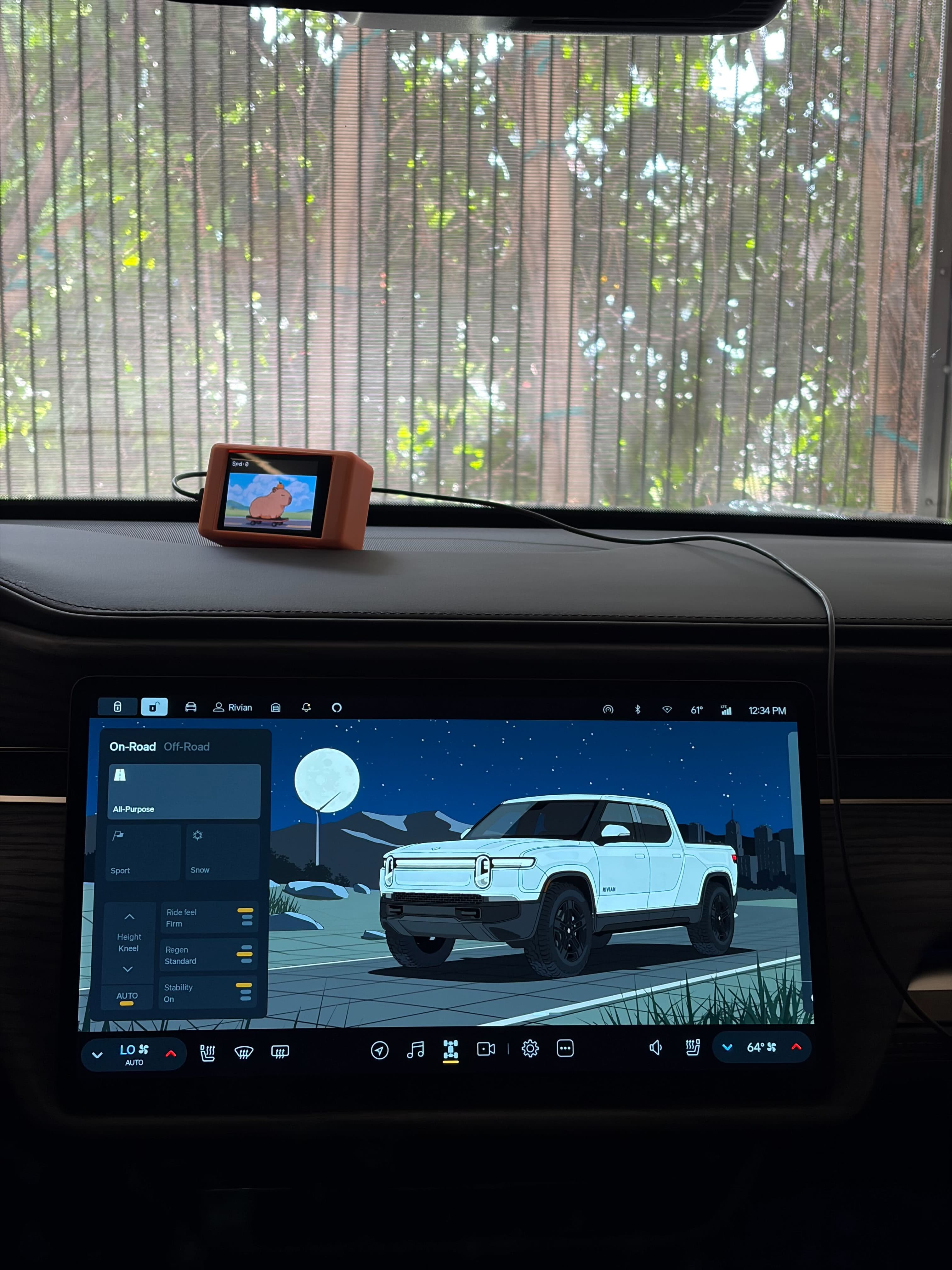
Rivian R1S EV-side OBD-II limitation analysis
Tested the same OBD-II data pipeline on a Rivian R1S and found that standard Mode $01 PID queries returned no usable vehicle telemetry. Identified the limitation as an EV-side diagnostic-access issue: engine-based PIDs such as RPM have no direct EV equivalent, while Rivian vehicle data is exposed through proprietary CAN/Ethernet and manufacturer-specific diagnostics rather than generic ELM327-class queries. Based on this finding, shifted the data-acquisition strategy from OBD-II polling to GPS- and IMU-based motion sensing.